
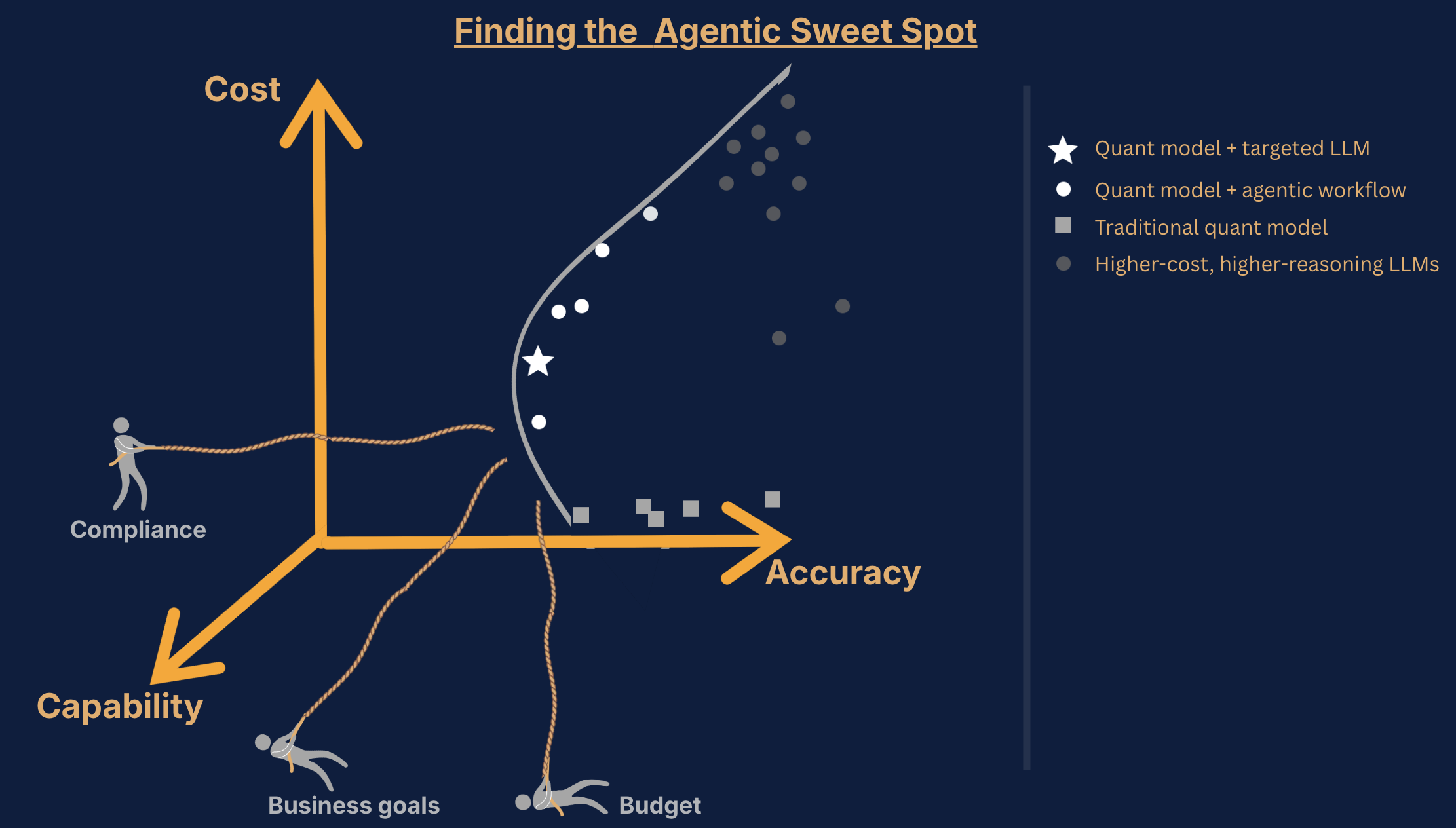
<!DOCTYPE html><html xmlns="http://www.w3.org/1999/xhtml" lang="" xml:lang=""><head><title>Agentic-Sweet-Spot</title><meta http-equiv="Content-Type" content="text/html; charset=UTF-8"/><meta name="generator" content="pdftohtml 0.36"/><meta name="author" content="sashsarangi"/><meta name="keywords" content="DAHVd3tRZHI,BADKjKpPWtI"/><meta name="date" content="2026-09-17T23:50:03+00:00"/><style type="text/css"><!--.xflip { -moz-transform: scaleX(-1); -webkit-transform: scaleX(-1); -o-transform: scaleX(-1); transform: scaleX(-1); filter: fliph;}.yflip { -moz-transform: scaleY(-1); -webkit-transform: scaleY(-1); -o-transform: scaleY(-1); transform: scaleY(-1); filter: flipv;}.xyflip { -moz-transform: scaleX(-1) scaleY(-1); -webkit-transform: scaleX(-1) scaleY(-1); -o-transform: scaleX(-1) scaleY(-1); transform: scaleX(-1) scaleY(-1); filter: fliph + flipv;}--></style></head><body bgcolor="#A0A0A0" vlink="blue" link="blue"><!-- Page 1 --><a name="1"></a><style type="text/css"><!-- p {margin: 0; padding: 0;} .ft10{font-size:52px;font-family:AAAAAA+OpenSauceOne;color:#ffffff;} .ft11{font-size:36px;font-family:AAAAAA+OpenSauceOne;color:#d8d6d6;}--></style><div id="page1-div" style="position:relative;width:918px;height:1187px;"><img width="918" height="1187" src="index001.png" alt="background image"/><p style="position:absolute;top:223px;left:78px;white-space:nowrap" class="ft10"><b>Finding the Agentic Sweet Spot</b></p><p style="position:absolute;top:295px;left:78px;white-space:nowrap" class="ft11"><b>Matching Architecture to Enterprise Constraints</b></p></div><!-- Page 2 --><a name="2"></a><style type="text/css"><!-- p {margin: 0; padding: 0;} .ft22{font-size:49px;font-family:AAAAAA+OpenSauceOne;color:#000000;} .ft23{font-size:18px;font-family:BAAAAA+OpenSauceOne;color:#000000;} .ft24{font-size:18px;font-family:AAAAAA+OpenSauceOne;color:#000000;} .ft25{font-size:25px;font-family:BAAAAA+OpenSauceOne;color:#535353;} .ft26{font-size:24px;font-family:AAAAAA+OpenSauceOne;color:#000000;} .ft27{font-size:15px;font-family:BAAAAA+OpenSauceOne;color:#535353;} .ft28{font-size:11px;font-family:AAAAAA+OpenSauceOne;color:#000000;} .ft29{font-size:27px;font-family:BAAAAA+OpenSauceOne;color:#1a1a1a;} .ft210{font-size:15px;font-family:AAAAAA+OpenSauceOne;color:#535353;} .ft211{font-size:18px;line-height:24px;font-family:BAAAAA+OpenSauceOne;color:#000000;} .ft212{font-size:18px;line-height:24px;font-family:AAAAAA+OpenSauceOne;color:#000000;} .ft213{font-size:15px;line-height:20px;font-family:AAAAAA+OpenSauceOne;color:#535353;}--></style><div id="page2-div" style="position:relative;width:918px;height:1187px;"><img width="918" height="1187" src="index002.png" alt="background image"/><p style="position:absolute;top:38px;left:70px;white-space:nowrap" class="ft22">Executive Summary</p><p style="position:absolute;top:178px;left:305px;white-space:nowrap" class="ft211"><b>Enterprise agentic systems rarely improve monotonically as<br/>more agents, tools, and reasoning stages are added. In this<br/>white paper, we present a comparative study of agentic<br/>architectures of varying complexity for predicting currency<br/>volatility. In this experiment, a simple hybrid combining a<br/>traditional quantitative model with a low-cost LLM significantly<br/>improved the results, while full orchestration of LLM-based<br/>agents was substantially more expensive and less accurate.<br/>The result is not a universal ranking of models. It is a design<br/>lesson: the most efficient agentic architecture depends on the<br/>problem, the information available at decision time, and the<br/>appropriate division of tasks between traditional models and<br/>LLMs.</b></p><p style="position:absolute;top:525px;left:305px;white-space:nowrap" class="ft24">The study led to the following lessons:</p><p style="position:absolute;top:574px;left:335px;white-space:nowrap" class="ft23"><b>An agentic sweet spot is plausible: </b></p><p style="position:absolute;top:574px;left:644px;white-space:nowrap" class="ft24">The observed</p><p style="position:absolute;top:599px;left:335px;white-space:nowrap" class="ft212">configurations formed a practical cost–accuracy trade-off.<br/>The light hybrid achieved better accuracy at an estimated<br/>cost of $0.015 per case. The orchestrated hybrid delivered<br/>lower accuracy at a higher estimated cost of $0.093 per<br/>case. In this experiment, additional orchestration did not<br/>produce better measured performance.</p><p style="position:absolute;top:772px;left:335px;white-space:nowrap" class="ft23"><b>Domain structure determines architecture: </b></p><p style="position:absolute;top:772px;left:711px;white-space:nowrap" class="ft24">The system</p><p style="position:absolute;top:797px;left:335px;white-space:nowrap" class="ft212">forecast one-hour-ahead USDJPY realized volatility around<br/>scheduled macroeconomic events. Quantitative finance<br/>provided natural numerical-model anchors, a known event<br/>calendar, and a bounded action space. A different problem -<br/>such as multi-document reconciliation or policy interpretation<br/>- could justify a richer agentic design.</p><p style="position:absolute;top:970px;left:335px;white-space:nowrap" class="ft23"><b>Separate calculation from context</b></p><p style="position:absolute;top:970px;left:635px;white-space:nowrap" class="ft24">: Quant libraries should</p><p style="position:absolute;top:995px;left:335px;white-space:nowrap" class="ft212">calculate returns, realized volatility, GARCH forecasts,<br/>losses, and statistical tests. LLMs should interpret contextual<br/>evidence, identify relevant regimes, and select among pre-<br/>approved actions. LLMs should not replace arithmetic that is<br/>already auditable and robust.</p><p style="position:absolute;top:650px;left:102px;white-space:nowrap" class="ft25"><b>Budget</b></p><p style="position:absolute;top:782px;left:104px;white-space:nowrap" class="ft25"><b>Quality</b></p><p style="position:absolute;top:912px;left:78px;white-space:nowrap" class="ft25"><b>Compliance</b></p><p style="position:absolute;top:106px;left:70px;white-space:nowrap" class="ft26">Choosing the Right Agentic Architecture for Enterprise Tasks</p><p style="position:absolute;top:690px;left:50px;white-space:nowrap" class="ft27"><b>Operate within the allocated</b></p><p style="position:absolute;top:710px;left:125px;white-space:nowrap" class="ft27"><b>budget.</b></p><p style="position:absolute;top:819px;left:22px;white-space:nowrap" class="ft27"><b>Meet defined quality and accuracy</b></p><p style="position:absolute;top:839px;left:100px;white-space:nowrap" class="ft27"><b>benchmarks.</b></p><p style="position:absolute;top:950px;left:51px;white-space:nowrap" class="ft27"><b>Adhere to governance and</b></p><p style="position:absolute;top:970px;left:65px;white-space:nowrap" class="ft27"><b>compliance guardrails.</b></p><p style="position:absolute;top:1135px;left:873px;white-space:nowrap" class="ft28">1</p><p style="position:absolute;top:548px;left:37px;white-space:nowrap" class="ft29"><b>Enterprise Design</b></p><p style="position:absolute;top:585px;left:77px;white-space:nowrap" class="ft29"><b>Constraints</b></p><p style="position:absolute;top:232px;left:26px;white-space:nowrap" class="ft27"><b>About EMAlpha. </b></p><p style="position:absolute;top:232px;left:145px;white-space:nowrap" class="ft210">EMAlpha designs</p><p style="position:absolute;top:252px;left:26px;white-space:nowrap" class="ft213">domain-specific agents for industry<br/>workflows. Its pre-trade agents<br/>provides real-time market updates<br/>and contextual intelligence for<br/>financial applications, illustrating<br/>how the calculation-versus-context<br/>principles in this paper can be<br/>applied in production settings.</p></div><!-- Page 3 --><a name="3"></a><style type="text/css"><!-- p {margin: 0; padding: 0;} .ft314{font-size:18px;font-family:AAAAAA+OpenSauceOne;color:#000000;} .ft315{font-size:15px;font-family:BAAAAA+OpenSauceOne;color:#000000;} .ft316{font-size:14px;font-family:CAAAAA+TTHoves;color:#ffffff;} .ft317{font-size:14px;font-family:DAAAAA+TTHoves;color:#000000;} .ft318{font-size:30px;font-family:AAAAAA+OpenSauceOne;color:#000000;} .ft319{font-size:18px;font-family:BAAAAA+OpenSauceOne;color:#000000;} .ft320{font-size:11px;font-family:BAAAAA+OpenSauceOne;color:#000000;} .ft321{font-size:15px;font-family:EAAAAA+OpenSauceOne;color:#1a1a1a;} .ft322{font-size:15px;font-family:FAAAAA+OpenSauceOne;color:#1a1a1a;} .ft323{font-size:15px;line-height:20px;font-family:BAAAAA+OpenSauceOne;color:#000000;} .ft324{font-size:14px;line-height:19px;font-family:CAAAAA+TTHoves;color:#ffffff;} .ft325{font-size:15px;line-height:20px;font-family:FAAAAA+OpenSauceOne;color:#1a1a1a;}--></style><div id="page3-div" style="position:relative;width:918px;height:1187px;"><img width="918" height="1187" src="index003.png" alt="background image"/><p style="position:absolute;top:203px;left:25px;white-space:nowrap" class="ft314"><b>Finding the Right Architecture</b></p><p style="position:absolute;top:246px;left:25px;white-space:nowrap" class="ft323">In finance, the efficient-frontier concept describes the best attainable trade-offs between risk and expected return.<br/>For a given level of risk, different asset mixes can produce different expected returns. The efficient frontier<br/>represents the best attainable risk–return combinations.. We use a similar lens for agentic architecture. Enterprise<br/>systems face competing constraints from budgets, business owners, risk functions, and compliance teams. A<br/>common assumption is that choosing lower-cost models necessarily sacrifices quality or accuracy. Our experience<br/>combining business outcomes with data science led us to question that simplification. This experiment was designed<br/>as a concrete test of whether a more expensive or more elaborate architecture actually delivers enough measurable<br/>value to justify its additional cost and complexity.</p><p style="position:absolute;top:429px;left:25px;white-space:nowrap" class="ft323">We tested the idea on one specific forecasting problem: one-hour-ahead volatility for the USDJPY currency pair.<br/>USDJPY is a useful test case because it is sensitive to monetary policy, central-bank intervention risk, evolving policy<br/>regimes, and shifts in global risk sentiment. The experiment translated the proposed “AI efficient frontier” into four<br/>comparable architecture designs. A0 was a rolling GARCH volatility forecast, a conventional quantitative baseline<br/>used for decades with varying degrees of success. A1 added one constrained language-model call that received a<br/>compact market and event packet and selected a multiplier from a fixed grid. A2 used four specialists, synthesis, and<br/>a critic before selecting the same bounded multiplier. A3 removed the numerical anchor and asked a language<br/>model to forecast volatility directly.</p><p style="position:absolute;top:645px;left:84px;white-space:nowrap" class="ft316"><b>Architecture Family</b></p><p style="position:absolute;top:645px;left:308px;white-space:nowrap" class="ft316"><b>Role of LLM</b></p><p style="position:absolute;top:645px;left:520px;white-space:nowrap" class="ft316"><b>Error</b></p><p style="position:absolute;top:636px;left:676px;white-space:nowrap" class="ft324"><b>Estimated<br/>cost/case</b></p><p style="position:absolute;top:716px;left:79px;white-space:nowrap" class="ft317">A0 - Pure Quant Model</p><p style="position:absolute;top:707px;left:277px;white-space:nowrap" class="ft317">No LLM, just traditional</p><p style="position:absolute;top:726px;left:305px;white-space:nowrap" class="ft317">quant models</p><p style="position:absolute;top:716px;left:520px;white-space:nowrap" class="ft317">3.546</p><p style="position:absolute;top:716px;left:686px;white-space:nowrap" class="ft317">$0.000</p><p style="position:absolute;top:787px;left:99px;white-space:nowrap" class="ft317">A1 - Light Hybrid </p><p style="position:absolute;top:778px;left:280px;white-space:nowrap" class="ft317">Light touch LLMs that</p><p style="position:absolute;top:797px;left:264px;white-space:nowrap" class="ft317">slightly tweak quant model </p><p style="position:absolute;top:787px;left:519px;white-space:nowrap" class="ft317">2.049</p><p style="position:absolute;top:787px;left:689px;white-space:nowrap" class="ft317">$0.015</p><p style="position:absolute;top:858px;left:80px;white-space:nowrap" class="ft317">A2 - Orchestrated LLM</p><p style="position:absolute;top:849px;left:283px;white-space:nowrap" class="ft317">LLMs as specialists +</p><p style="position:absolute;top:868px;left:296px;white-space:nowrap" class="ft317">synthesis + critic</p><p style="position:absolute;top:858px;left:520px;white-space:nowrap" class="ft317">2.755</p><p style="position:absolute;top:858px;left:687px;white-space:nowrap" class="ft317">$0.093</p><p style="position:absolute;top:929px;left:107px;white-space:nowrap" class="ft317">A3 - Pure LLM</p><p style="position:absolute;top:929px;left:265px;white-space:nowrap" class="ft317">Direct forecast using LLMs</p><p style="position:absolute;top:929px;left:520px;white-space:nowrap" class="ft317">2.884</p><p style="position:absolute;top:929px;left:689px;white-space:nowrap" class="ft317">$0.018</p><p style="position:absolute;top:80px;left:28px;white-space:nowrap" class="ft318"><b>Matching Agentic Architecture to Enterprise Requirements</b></p><p style="position:absolute;top:126px;left:28px;white-space:nowrap" class="ft319">Lessons from a quant–LLM experiment in architecture, cost, and quality</p><p style="position:absolute;top:1135px;left:870px;white-space:nowrap" class="ft320">2</p><p style="position:absolute;top:983px;left:32px;white-space:nowrap" class="ft321"><i><b>Table 1. Primary comparison of four architecture families for one-hour-ahead USDJPY volatility forecasting.</b></i></p><p style="position:absolute;top:983px;left:801px;white-space:nowrap" class="ft322"><i> The</i></p><p style="position:absolute;top:1003px;left:32px;white-space:nowrap" class="ft325"><i>study covered 136 separate forecast cases, including officially scheduled event periods and quieter control periods.<br/>Each LLM-based architecture was run three times on the same cases to distinguish repeatable performance patterns<br/>from nondeterministic model variation. Forecast error was calculated using the quasi-likelihood loss metric described<br/>earlier. Estimated costs represent LLM inference costs based on logged tokens and frozen catalog prices; they<br/>exclude engineering, infrastructure, storage, and local quantitative computation.</i></p></div><!-- Page 4 --><a name="4"></a><style type="text/css"><!-- p {margin: 0; padding: 0;} .ft426{font-size:30px;font-family:AAAAAA+OpenSauceOne;color:#a6a6a6;} .ft427{font-size:15px;font-family:CAAAAA+OpenSauceOne;color:#1a1a1a;} .ft428{font-size:15px;font-family:DAAAAA+OpenSauceOne;color:#1a1a1a;} .ft429{font-size:15px;line-height:20px;font-family:DAAAAA+OpenSauceOne;color:#1a1a1a;}--></style><div id="page4-div" style="position:relative;width:918px;height:1187px;"><img width="918" height="1187" src="index004.png" alt="background image"/><p style="position:absolute;top:36px;left:34px;white-space:nowrap" class="ft426"><b>The Architecture Sweet Spot</b></p><p style="position:absolute;top:1135px;left:870px;white-space:nowrap" class="ft420">3</p><p style="position:absolute;top:671px;left:50px;white-space:nowrap" class="ft427"><i><b>Figure 1. Error–cost comparison across 24 architecture configurations.</b></i></p><p style="position:absolute;top:671px;left:561px;white-space:nowrap" class="ft428"><i> Each point represents one architecture</i></p><p style="position:absolute;top:691px;left:50px;white-space:nowrap" class="ft429"><i>evaluated for USDJPY volatility forecasting. Cost reflects estimated LLM inference cost, while error is calculated<br/>using the quasi-likelihood loss measure described earlier. Stars identify configurations that are nondominated (most<br/>optimal) when considering error and cost. The 24 configurations are grouped into the A0, A1, A2, and A3 architecture<br/>families described in Table 1; the appendix provides details of each variation.</i></p><p style="position:absolute;top:811px;left:50px;white-space:nowrap" class="ft414"><b>Finding 1: Expect a sweet spot, not “more agents is better”</b></p><p style="position:absolute;top:855px;left:50px;white-space:nowrap" class="ft423">The error–cost view in Figure 1 illustrates the type of trade-off product teams should examine: lower error may<br/>require additional cost, but the marginal benefit can flatten or reverse. In the broader 24-configuration comparison,<br/>the lowest-error candidates included A0-GARCH-X, A1-LLM-Residual, A1-Probabilistic-LLM, the event-only hybrid, and<br/>A2-Conditional-Router. Because these configurations were evaluated on a very specific case (USDJPY volatility<br/>forecasting), the broader comparison should be interpreted as an architecture-screening exercise rather than as a<br/>single definitive ranking. In the full architecture comparison, A1 was the strongest measured operating point and<br/>outperformed A2 on error, capability score, and cost.</p><p style="position:absolute;top:1017px;left:50px;white-space:nowrap" class="ft423">This is the practical meaning of a sweet spot. It is not a universal curve estimated from the data. It is a set of<br/>configurations that remain attractive under explicit error, capability, and cost comparisons. Product teams should<br/>therefore benchmark an architecture ladder, measure marginal value per unit cost and latency, and stop adding<br/>orchestration when the next stage does not improve the target objective.</p></div><!-- Page 5 --><a name="5"></a><style type="text/css"><!-- p {margin: 0; padding: 0;} .ft530{font-size:14px;line-height:19px;font-family:DAAAAA+TTHoves;color:#000000;}--></style><div id="page5-div" style="position:relative;width:918px;height:1187px;"><img width="918" height="1187" src="index005.png" alt="background image"/><p style="position:absolute;top:36px;left:34px;white-space:nowrap" class="ft526"><b>Domain Expertise Determines Architecture</b></p><p style="position:absolute;top:1135px;left:870px;white-space:nowrap" class="ft520">4</p><p style="position:absolute;top:114px;left:34px;white-space:nowrap" class="ft514"><b>Finding 2: Domain expertise determines the architecture</b></p><p style="position:absolute;top:157px;left:34px;white-space:nowrap" class="ft523">The architecture worked because the task was structured. The target was realized volatility, the numerical output<br/>was positive and bounded, and the model could act only through a small multiplier grid. That made a quant library the<br/>correct source of arithmetic and made the language model’s role narrow: recognize contextual conditions that might<br/>justify a controlled adjustment.</p><p style="position:absolute;top:259px;left:34px;white-space:nowrap" class="ft523">The same design should not be copied into a task whose difficulty lies in evidence reconciliation. If the business<br/>problem requires comparing contradictory contracts, extracting numeric exceptions from documents, or<br/>coordinating tools with different permissions, a multi-agent design may be justified. But those capabilities must be<br/>measured directly. A capability score inferred from model breadth or forecast loss is not enough.</p><p style="position:absolute;top:403px;left:168px;white-space:nowrap" class="ft516"><b>Task</b></p><p style="position:absolute;top:403px;left:400px;white-space:nowrap" class="ft516"><b>Preferred Owner</b></p><p style="position:absolute;top:403px;left:696px;white-space:nowrap" class="ft516"><b>Reason</b></p><p style="position:absolute;top:461px;left:74px;white-space:nowrap" class="ft517">Returns, realized volatility, forecasts</p><p style="position:absolute;top:471px;left:380px;white-space:nowrap" class="ft517">Quant/statistical libraries</p><p style="position:absolute;top:461px;left:645px;white-space:nowrap" class="ft517">Auditable arithmetic and</p><p style="position:absolute;top:480px;left:677px;white-space:nowrap" class="ft517">reproducibility</p><p style="position:absolute;top:550px;left:63px;white-space:nowrap" class="ft517">Losses, confidence intervals, backtests</p><p style="position:absolute;top:550px;left:380px;white-space:nowrap" class="ft517">Quant/statistical libraries</p><p style="position:absolute;top:540px;left:625px;white-space:nowrap" class="ft517">Explicit definitions and testable</p><p style="position:absolute;top:559px;left:692px;white-space:nowrap" class="ft517">inference</p><p style="position:absolute;top:629px;left:78px;white-space:nowrap" class="ft517">Event classification and relevance</p><p style="position:absolute;top:629px;left:379px;white-space:nowrap" class="ft517">Constrained LLM or rules</p><p style="position:absolute;top:619px;left:624px;white-space:nowrap" class="ft517">Context interpretation under an</p><p style="position:absolute;top:638px;left:693px;white-space:nowrap" class="ft517">allow-list</p><p style="position:absolute;top:698px;left:83px;white-space:nowrap" class="ft517">Contradictory-source resolution</p><p style="position:absolute;top:708px;left:359px;white-space:nowrap" class="ft517">Multi-agent workflow, if needed</p><p style="position:absolute;top:698px;left:614px;white-space:nowrap" class="ft517">Independent evidence checks and</p><p style="position:absolute;top:717px;left:689px;white-space:nowrap" class="ft517">escalation</p><p style="position:absolute;top:794px;left:147px;white-space:nowrap" class="ft517">Final action</p><p style="position:absolute;top:794px;left:334px;white-space:nowrap" class="ft517">Deterministic policy layer</p><p style="position:absolute;top:785px;left:612px;white-space:nowrap" class="ft530">Bounded, logged, reversible<br/>decision</p><p style="position:absolute;top:913px;left:41px;white-space:nowrap" class="ft521"><i><b>Table 2:  Agentic division of labor -</b></i></p><p style="position:absolute;top:913px;left:290px;white-space:nowrap" class="ft522"><i> This table illustrates a division-of-labor principle for agentic systems. Traditional</i></p><p style="position:absolute;top:933px;left:41px;white-space:nowrap" class="ft525"><i>(i.e., pre-GenAI) quantitative/machine-learning libraries should handle calculations and statistical inference because<br/>these tasks require auditability, reproducibility, and explicit definitions. LLMs or rules should be used for contextual<br/>interpretation, while multi-agent workflows should be reserved for genuinely difficult evidence-reconciliation tasks.<br/>Final actions should pass through a bounded, logged, and reversible policy layer.</i></p></div><!-- Page 6 --><a name="6"></a><style type="text/css"><!-- p {margin: 0; padding: 0;} .ft631{font-size:15px;font-family:AAAAAA+OpenSauceOne;color:#000000;} .ft632{font-size:18px;font-family:AAAAAA+OpenSauceOne;color:#535353;}--></style><div id="page6-div" style="position:relative;width:918px;height:1187px;"><img width="918" height="1187" src="index006.png" alt="background image"/><p style="position:absolute;top:36px;left:34px;white-space:nowrap" class="ft626"><b>From Findings to Design Principles</b></p><p style="position:absolute;top:1135px;left:870px;white-space:nowrap" class="ft620">5</p><p style="position:absolute;top:318px;left:45px;white-space:nowrap" class="ft614"><b>Product and quantitative design guidance</b></p><p style="position:absolute;top:361px;left:45px;white-space:nowrap" class="ft615">The main design lessons from this comparative study are:</p><p style="position:absolute;top:402px;left:71px;white-space:nowrap" class="ft631"><b>Begin with a strong deterministic baseline. </b></p><p style="position:absolute;top:402px;left:382px;white-space:nowrap" class="ft615">Calibrate it on a development sample and make it strong enough that</p><p style="position:absolute;top:422px;left:71px;white-space:nowrap" class="ft615">any claimed LLM improvement has a credible benchmark.</p><p style="position:absolute;top:442px;left:71px;white-space:nowrap" class="ft631"><b>Define the information boundary before designing prompts.</b></p><p style="position:absolute;top:442px;left:500px;white-space:nowrap" class="ft615"> A clear division of labor between quantitative</p><p style="position:absolute;top:463px;left:71px;white-space:nowrap" class="ft615">systems and LLMs is more important than prompt sophistication alone.</p><p style="position:absolute;top:483px;left:71px;white-space:nowrap" class="ft631"><b>Use the smallest architecture that can complete the task.</b></p><p style="position:absolute;top:483px;left:488px;white-space:nowrap" class="ft615"> Add agents only when they perform a distinct</p><p style="position:absolute;top:503px;left:71px;white-space:nowrap" class="ft615">operation that can be measured independently.</p><p style="position:absolute;top:523px;left:71px;white-space:nowrap" class="ft631"><b>Keep the action space bounded when the business process permits it. </b></p><p style="position:absolute;top:523px;left:586px;white-space:nowrap" class="ft615">A constrained multiplier or policy choice</p><p style="position:absolute;top:544px;left:71px;white-space:nowrap" class="ft615">is easier to validate than unconstrained numerical or textual generation.</p><p style="position:absolute;top:564px;left:71px;white-space:nowrap" class="ft631"><b>Create a separate capability suite.</b></p><p style="position:absolute;top:564px;left:319px;white-space:nowrap" class="ft615"> Test extraction, conflict detection, citation accuracy, tool compliance, and</p><p style="position:absolute;top:584px;left:71px;white-space:nowrap" class="ft623">temporal reasoning using known answers rather than inferring capability from model size or forecast<br/>performance.</p><p style="position:absolute;top:663px;left:45px;white-space:nowrap" class="ft614"><b>Conclusion</b></p><p style="position:absolute;top:711px;left:45px;white-space:nowrap" class="ft615">The central lesson from this study is </p><p style="position:absolute;top:711px;left:304px;white-space:nowrap" class="ft631"><b>architectural discipline</b></p><p style="position:absolute;top:711px;left:471px;white-space:nowrap" class="ft615">. Agentic systems can have a sweet spot, but that sweet</p><p style="position:absolute;top:732px;left:45px;white-space:nowrap" class="ft623">spot is created by matching the architecture to the domain rather than by maximizing the number of agents or the<br/>amount of LLM reasoning. Traditional quantitative libraries should own arithmetic and statistical calculations because<br/>those tasks are auditable, reproducible, and robust. LLMs should be reserved for contextual tasks that genuinely<br/>require interpretation or reasoning. The additional context should then be measured against the business objective to<br/>determine whether it justifies the added cost and operational complexity.</p><p style="position:absolute;top:131px;left:45px;white-space:nowrap" class="ft614"><b>Finding 3: Calculation versus context</b></p><p style="position:absolute;top:175px;left:45px;white-space:nowrap" class="ft623">A robust agentic system should divide work according to the strengths of each component. Deterministic libraries<br/>should own calculations that have explicit definitions, stable tests, and known numerical behavior. The language<br/>model should handle contextual interpretation only where it adds information that the numerical system cannot<br/>obtain from structured inputs. In this study, adding more reasoning stages to the LLM component did not improve<br/>measured forecast error enough to justify the additional cost and complexity.</p><p style="position:absolute;top:928px;left:45px;white-space:nowrap" class="ft632"><b>Data and Production Context</b></p><p style="position:absolute;top:976px;left:45px;white-space:nowrap" class="ft623">Real-time market updates used by the production-oriented workflow were sourced through EMAlpha’s CoTrader<br/>agent. The historical evaluation was replayed on a frozen, point-in-time dataset so that the results could be audited<br/>and reproduced. Quantitative libraries remained responsible for the numerical calculations, forecast generation, and<br/>error evaluation.</p></div><!-- Page 7 --><a name="7"></a><style type="text/css"><!-- p {margin: 0; padding: 0;}--></style><div id="page7-div" style="position:relative;width:918px;height:1187px;"><img width="918" height="1187" src="index007.png" alt="background image"/><p style="position:absolute;top:28px;left:30px;white-space:nowrap" class="ft726"><b>Appendix: Description of Architectures</b></p><p style="position:absolute;top:1135px;left:870px;white-space:nowrap" class="ft720">6</p><p style="position:absolute;top:1025px;left:46px;white-space:nowrap" class="ft727"><i><b>Table A. Summary of the 24 architecture configurations.</b></i></p><p style="position:absolute;top:1025px;left:451px;white-space:nowrap" class="ft728"><i> Error is measured using the QLIKE quasi-likelihood loss,</i></p><p style="position:absolute;top:1045px;left:46px;white-space:nowrap" class="ft729"><i>which compares each predicted volatility with the subsequently realized volatility; lower values indicate better<br/>forecasts. Capability is an exploratory score between 0 and 1 based on observable features such as contextual<br/>coverage, event handling, specialist diversity, synthesis quality, critic behavior, and compliance with output<br/>constraints. Estimated cost represents the LLM inference cost per forecast case, calculated from logged input<br/>and output tokens and the applicable model prices; it excludes engineering, infrastructure, storage, and local<br/>quantitative-computing costs</i></p></div><!-- Page 8 --><a name="8"></a><style type="text/css"><!-- p {margin: 0; padding: 0;} .ft833{font-size:15px;font-family:BAAAAA+OpenSauceOne;color:#1a1a1a;} .ft834{font-size:15px;line-height:20px;font-family:BAAAAA+OpenSauceOne;color:#1a1a1a;}--></style><div id="page8-div" style="position:relative;width:918px;height:1187px;"><img width="918" height="1187" src="index008.png" alt="background image"/><p style="position:absolute;top:36px;left:34px;white-space:nowrap" class="ft826"><b>Appendix: Detailed Architecture Descriptions</b></p><p style="position:absolute;top:1135px;left:871px;white-space:nowrap" class="ft820">7</p><p style="position:absolute;top:124px;left:32px;white-space:nowrap" class="ft831"><b>Detailed Descriptions of the Agentic Architectures</b></p><p style="position:absolute;top:164px;left:32px;white-space:nowrap" class="ft834">Table A (previous page) brings together 24 architecture configurations spanning four levels of computational and<br/>agentic complexity. The purpose of the comparative study in this white paper is not simply to compare different<br/>model names, but to examine how the division of labor between quantitative models, single-call LLMs, and multi-<br/>agent workflows affects forecast error, capability, and estimated inference cost.</p><p style="position:absolute;top:266px;left:32px;white-space:nowrap" class="ft834">The A0 group contains nine deterministic quantitative configurations. These include conventional volatility models<br/>such as EWMA, GARCH, HAR, and GARCH-X, as well as richer quantitative variants such as regime-based GARCH,<br/>multivariate DCC-style modeling, and a realized-volatility ensemble. The A0 family also includes two hybrids in which<br/>an LLM is added to the GARCH-X baseline for either event-only or market-only interpretation. These configurations<br/>establish the numerical and calibration benchmarks against which the LLM-based architectures can be evaluated.</p><p style="position:absolute;top:387px;left:32px;white-space:nowrap" class="ft834">The A1 group contains seven light-LLM configurations that make targeted adjustments to quantitative forecasts. The<br/>benchmark versions use different model sizes - Nano, Mini, GPT-5, and GPT-5.5 - to test whether a larger or more<br/>expensive model produces enough improvement to justify its cost. The additional pilot configurations assign the LLM<br/>more specific roles: classifying event relevance, modeling a residual adjustment, or producing a probabilistic<br/>forecast. These are deliberately narrow, single-call designs. They use the quantitative system as the primary<br/>numerical engine and ask the LLM to perform one clearly bounded contextual or calibration task.</p><p style="position:absolute;top:529px;left:32px;white-space:nowrap" class="ft834">The A2 group distributes the task across multiple LLM-based decision stages. It contains six multi-agent<br/>configurations. The original A2 design used several specialists followed by synthesis and critique. The event-priority<br/>versions introduced a protocol that explicitly instructed the system to give precedence to scheduled-event<br/>information and included either a critic or no critic. The other variants explored alternative coordination strategies:<br/>competitive specialists, independent synthesis, and a conditional router that selects a workflow based on the case.<br/>These configurations test whether additional agents and reasoning stages create enough incremental value to justify<br/>their higher cost and operational complexity.</p><p style="position:absolute;top:691px;left:32px;white-space:nowrap" class="ft834">The A3 group gives the LLM greater responsibility for generating the forecast directly, rather than using it primarily to<br/>adjust a quantitative model. It contains two direct-forecast configurations. These designs reduce or remove the role<br/>of the quantitative volatility anchor and ask the LLM to produce the forecast more directly. The benchmark A3 uses<br/>GPT-5, while the pilot A3 adds explicit output constraints. This group tests the opposite design philosophy from A1<br/>and A2: rather than using the LLM to adjust a trusted numerical forecast, it gives the LLM greater responsibility for<br/>generating the forecast itself.</p><p style="position:absolute;top:833px;left:32px;white-space:nowrap" class="ft834">The Capability score is an exploratory measure of how much contextual and orchestration functionality an<br/>architecture can perform beyond numerical forecasting. It combines observable components such as event<br/>coverage, contextual relevance, specialist diversity, synthesis quality, critic behavior, and compliance with output<br/>constraints. These components are normalized to a common scale and combined into a weighted score between 0<br/>and 1, where higher values indicate broader measured capability. The score should be interpreted directionally rather<br/>than as a universal measure of intelligence, because not every architecture was evaluated on an identical standalone<br/>capability test suite.</p></div><!-- Page 9 --><a name="9"></a><style type="text/css"><!-- p {margin: 0; padding: 0;} .ft935{font-size:21px;font-family:AAAAAA+TTHoves;color:#535353;} .ft936{font-size:21px;font-family:BAAAAA+TTHoves;color:#535353;} .ft937{font-size:22px;font-family:BAAAAA+TTHoves;color:#535353;} .ft938{font-size:22px;font-family:AAAAAA+TTHoves;color:#535353;} .ft939{font-size:30px;font-family:CAAAAA+OpenSauceOne;color:#a6a6a6;} .ft940{font-size:22px;line-height:37px;font-family:BAAAAA+TTHoves;color:#535353;}--></style><div id="page9-div" style="position:relative;width:918px;height:1187px;"><img width="918" height="1187" src="index009.png" alt="background image"/><p style="position:absolute;top:613px;left:343px;white-space:nowrap" class="ft935"><b>Thank you for reading.</b></p><p style="position:absolute;top:667px;left:343px;white-space:nowrap" class="ft936">We welcome questions and conversations about</p><p style="position:absolute;top:693px;left:343px;white-space:nowrap" class="ft936">designing cost-effective, reliable, and domain-</p><p style="position:absolute;top:720px;left:343px;white-space:nowrap" class="ft936">appropriate agentic systems for enterprise applications.</p><p style="position:absolute;top:747px;left:343px;white-space:nowrap" class="ft936">EMAlpha creates industry-focused agents that</p><p style="position:absolute;top:773px;left:343px;white-space:nowrap" class="ft936">combine real-time contextual intelligence with trusted</p><p style="position:absolute;top:800px;left:343px;white-space:nowrap" class="ft936">quantitative and operational systems. Our CoTrader</p><p style="position:absolute;top:827px;left:343px;white-space:nowrap" class="ft936">agent is an example of this approach for financial-</p><p style="position:absolute;top:854px;left:343px;white-space:nowrap" class="ft936">market workflows. Please contact us to discuss the</p><p style="position:absolute;top:880px;left:343px;white-space:nowrap" class="ft936">findings, the experiment, or potential applications to</p><p style="position:absolute;top:907px;left:343px;white-space:nowrap" class="ft936">your organization.</p><p style="position:absolute;top:977px;left:394px;white-space:nowrap" class="ft940">10 Glenlake Parkway, Suite 130, <br/>Atlanta, GA 30328, USA</p><p style="position:absolute;top:1052px;left:394px;white-space:nowrap" class="ft938"><b>[email protected]</b></p><p style="position:absolute;top:1090px;left:394px;white-space:nowrap" class="ft937">https://emalpha.com</p><p style="position:absolute;top:269px;left:61px;white-space:nowrap" class="ft939"><b>· Agentic architecture design </b></p><p style="position:absolute;top:328px;left:61px;white-space:nowrap" class="ft939"><b>· Quantitative systems </b></p><p style="position:absolute;top:386px;left:61px;white-space:nowrap" class="ft939"><b>· LLM governance </b></p><p style="position:absolute;top:445px;left:61px;white-space:nowrap" class="ft939"><b>· Cost–quality-capability trade-offs</b></p></div><hr/><a name="outline"></a><h1>Document Outline</h1><ul><li><a href="index.html#1">Finding the Agentic Sweet Spot</a><ul><li><a href="index.html#2">Enterprise Design Constraints</a></li></ul></li><li><a href="index.html#2">Executive Summary</a><ul><li><a href="index.html#2">Choosing the Right Agentic Architecture for Enterprise Tasks</a><ul><li><a href="index.html#2">Enterprise agentic systems rarely improve monotonically as more agents, tools, and reasoning stages are added. In this white paper, we present a comparative study of agentic architectures of varying complexity for predicting currency volatility. In this experiment, a simple hybrid combining a traditional quantitative model with a low-cost LLM significantly improved the results, while full orchestration of LLM-based agents was substantially more expensive and less accurate. The result is not a universal ranking of models. It is a design lesson: the most efficient agentic architecture depends on the problem, the information available at decision time, and the appropriate division of tasks between traditional models and LLMs.</a><ul><li><a href="index.html#2">The study led to the following lessons:</a></li><li><a href="index.html#2">An agentic sweet spot is plausible: The observed configurations formed a practical cost–accuracy trade-off. The light hybrid achieved better accuracy at an estimated cost of $0.015 per case. The orchestrated hybrid delivered lower accuracy at a higher estimated cost of $0.093 per case. In this experiment, additional orchestration did not produce better measured performance.</a></li><li><a href="index.html#2">Domain structure determines architecture: The system forecast one-hour-ahead USDJPY realized volatility around scheduled macroeconomic events. Quantitative finance provided natural numerical-model anchors, a known event calendar, and a bounded action space. A different problem - such as multi-document reconciliation or policy interpretation - could justify a richer agentic design.</a></li><li><a href="index.html#2">Separate calculation from context: Quant libraries should calculate returns, realized volatility, GARCH forecasts, losses, and statistical tests. LLMs should interpret contextual evidence, identify relevant regimes, and select among pre-approved actions. LLMs should not replace arithmetic that is already auditable and robust.</a></li></ul></li></ul></li><li><a href="index.html#2">Budget</a><ul><li><a href="index.html#2">Operate within the allocated budget.</a></li></ul></li><li><a href="index.html#2">Quality</a><ul><li><a href="index.html#2">Meet defined quality and accuracy benchmarks.</a></li></ul></li><li><a href="index.html#2">Compliance</a><ul><li><a href="index.html#2">Adhere to governance and compliance guardrails.</a></li></ul></li></ul></li><li><a href="index.html#3">Matching Agentic Architecture to Enterprise Requirements</a><ul><li><a href="index.html#3">Lessons from a quant–LLM experiment in architecture, cost, and quality</a></li><li><a href="index.html#3">Finding the Right Architecture</a><ul><li><a href="index.html#3">Architecture Family</a></li><li><a href="index.html#3">Role of LLM</a></li><li><a href="index.html#3">Error</a></li><li><a href="index.html#3">Estimated cost/case</a></li></ul></li></ul></li><li><a href="index.html#4">The Architecture Sweet Spot</a><ul><li><a href="index.html#4">Finding 1: Expect a sweet spot, not “more agents is better”</a></li></ul></li><li><a href="index.html#5">Domain Expertise Determines Architecture</a><ul><li><a href="index.html#5">Finding 2: Domain expertise determines the architecture</a><ul><li><a href="index.html#5">Task</a></li><li><a href="index.html#5">Preferred Owner</a></li><li><a href="index.html#5">Reason</a></li></ul></li></ul></li><li><a href="index.html#6">From Findings to Design Principles</a><ul><li><a href="index.html#6">Finding 3: Calculation versus context</a></li><li><a href="index.html#6">Product and quantitative design guidance</a></li><li><a href="index.html#6">Conclusion</a></li><li><a href="index.html#6">Data and Production Context</a></li></ul></li><li><a href="index.html#7">Appendix: Description of Architectures</a></li><li><a href="index.html#8">Appendix: Detailed Architecture Descriptions</a><ul><li><a href="index.html#8">Detailed Descriptions of the Agentic Architectures</a></li></ul></li><li><a href="index.html#9">· Agentic architecture design</a></li><li><a href="index.html#9">· Quantitative systems</a></li><li><a href="index.html#9">· LLM governance</a></li><li><a href="index.html#9">· Cost–quality-capability trade-offs</a><ul><li><a href="index.html#9">Thank you for reading.</a></li><li><a href="index.html#9">[email protected]</a></li></ul></li></ul></body></html>
ai agents
Finding the Agentic Sweet Spot
<! DOCTYPE html><html xmlns="http://www.
Related research
More published perspectives.

ai-llmSeptember 8, 2026
AI Boom Meets Geopolitical Headwinds: A Divergent May for Equity Markets
The global equity landscape in May 2026 was defined by a stark divergence between the AI-fuelled euphoria in East Asia and the cautious retreat in other emerging hubs. While the AI and semiconductor s
ai-llmemerging-markets
emerging-markets · macroView insight

ai-llmJune 24, 2026
A Tale of Two Stock Markets
Bloomberg and Reuters this morning both cited South Korean local media coverage as the trigger behind today’s sharp KOSPI sell-off. But EMAlpha’s MacroMonitor AI Agent had been tracking this narrative
ai-llmemerging-markets
emerging-markets · markets-and-macroView insight